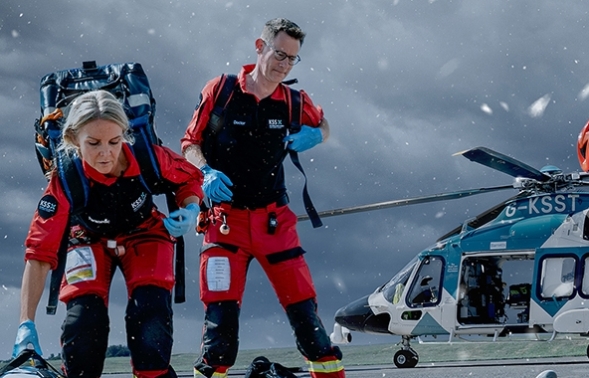

The study analysed the outcomes of 3,225 major trauma patients treated by KSS between 2013 and 2022. Using advanced modelling techniques to predict expected survival based on the severity of injury, the research found that HEMS patients were five percentage points more likely to survive than predicted. This equates to five more lives saved than would be expected for every 100 severely injured patients, or as many as 115 additional lives saved each year, based on typical annual caseloads.
The data shows that severely injured patients with a moderate to severe chance of survival (25– 45%) were particularly likely to benefit, with 35% surviving unexpectedly. Among those with a very low chance of survival, 39% beat the odds.
Key factors associated with increased survival included younger age, higher levels of consciousness on arrival, and access to Pre-Hospital Emergency Anaesthesia (PHEA) — a highly specialised intervention that only HEMS teams like KSS can deliver at the scene.
The study also looked at patients whose hearts had stopped after a serious injury. Between 2013 and 2022, the probability of successfully restarting the heart increased by around 6% each year, showing how pre-hospital treatment and care has strengthened over time.
Jo Griggs, Head of Research and Innovation at KSS, and author of the research paper, said: “While our findings reflect higher than expected survival rather than direct proof of causation, they clearly illustrate the scale of benefit that advanced HEMS can bring to a region’s emergency care system, such as KSS provides across the South East within trauma networks and in partnership with South East Coast Ambulance Service NHS Foundation Trust.
“The impact extends far beyond clinical outcomes: saving younger trauma patients not only prevents unimaginable heartbreak for families, but also protects years of life, reduces long term disability, and lowers future healthcare needs.
“For the most seriously injured patients, this research shows that air ambulance treatment and care significantly improve survival against the odds. Beyond the research, our teams continue to save
lives every day by delivering advanced emergency care at the scene, giving patients the best possible chance of survival.
“We’re confident these research findings support that need for continued investment in Helicopter Emergency Medical Services (HEMS) which bring life-saving interventions to critically injured
patients across the UK.”
KSS is an independent charity, with every lifesaving mission almost entirely funded through the generosity of its supporters across Kent, Surrey and Sussex. This community backing enables the service to deliver the advanced pre-hospital care that the new research shows is closely associated with significantly improved chance of survival for the most seriously injured patients.
To read the full paper please click here