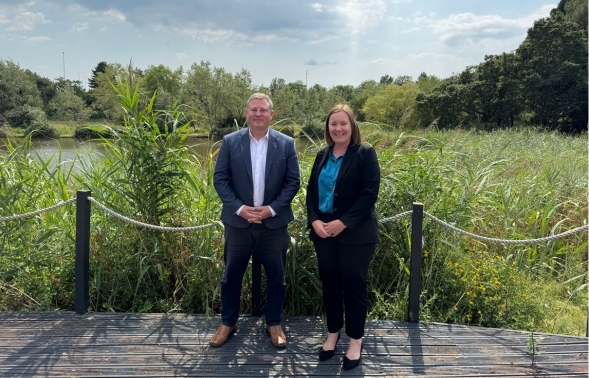

Emeritus Professor Joe Nellis is Head of Economic Research at MHA, the accountancy and advisory firm.
Public sector net borrowing of £18.3 billion in August provides another reminder of the fiscal straightjacket facing the Government ahead of the 28 October Budget.
Borrowing remains stubbornly high despite the fact the UK already has an historically heavy tax burden. Taxes will absorb around 37% of national income by the end of this financial year and, based on OBR forecasts, will reach a record 38.5% by 2030/31.
The last time the tax burden was this high was in the early 1980s, while today's overall tax receipts are among the highest seen the late 1940’s.
But why is the deficit proving so hard to reduce? The weakness lies mainly on the expenditure side. Higher inflation is impacting spending on public-sector pay, state benefits and pensions. And last week’s announcement that inflation has hit 3.1% will not have helped.
On top of this, the cost of servicing the national debt remains exceptionally high. Public sector net debt is just below £3 trillion, representing around 94% of GDP, the highest since the early 1960s.
Consequently, relatively small increases in interest rates and inflation now have significant fiscal consequences. Debt interest is likely to reach £115 billion this year. The OBR estimates that debt interest was equivalent to around 3.6% of GDP in 2025/26. It expects the ratio to remain exceptionally high and rise towards 3.8% by 2030/31.
This puts the UK among the three G7 economies carrying the heaviest debt-interest burden, alongside the USA and Italy. This is money that might otherwise have financed public services, investment or tax reductions.
In March, the OBR forecast total borrowing of £115.5 billion for 2026/27, but persistent monthly overshoots will make that increasingly likely to be significantly exceeded at a time when bond yields have been rising – and are currently at their highest since the 2008 Global Financial Crisis.
These higher borrowing costs have eroded the Chancellor’s fiscal headroom at a time when the Government has substantial commitments on public services, defence and investment.
Without stronger and sustained economic growth to deliver improvement in revenues, the choices on 28 October are clear stark: higher taxes, cuts in public sector spending or additional borrowing.