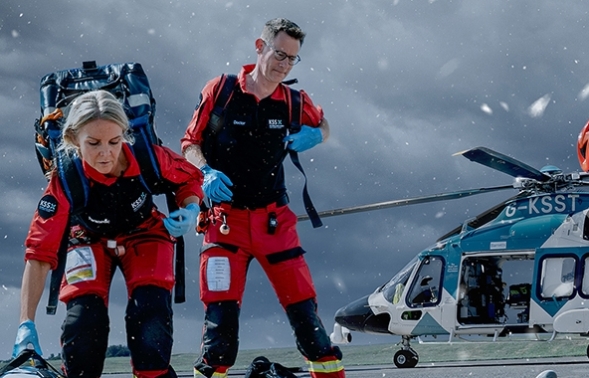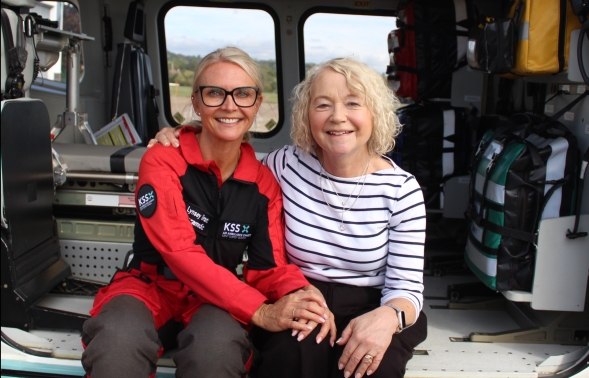

Representatives from KSS were among the multidisciplinary group of experts contributing to the updated guidelines, alongside other colleagues from anaesthesia, pre-hospital emergency medicine, intensive care medicine and specialist societies. Their involvement reflects the ongoing contribution made by KSS to the wider pre-hospital community through research, education and sharing best practice.
Pre-hospital emergency anaesthesia and advanced airway management are sometimes required before a patient reaches hospital and current guidance recommends that, when needed, anaesthesia should ideally be delivered on scene or as soon as possible after injury.
Air ambulance charities such as KSS are equipped to carry out these procedures in challenging environments such as the roadside, a patient’s home or a remote location. The updated PHEA guidelines reaffirm the core principle that patients should receive the same standard of care before reaching hospital as they do on arrival in a hospital emergency department. When required, a patient should receive PHEA at the scene and as soon as possible after injury.
The new guidance reflects advances in both pre-hospital and in-hospital emergency anaesthesia since the last edition was published in 2017. They include updated recommendations on training, equipment, monitoring, airway management, paediatric care and decision-making, aiming to ensure that patients who require emergency anaesthesia before reaching hospital continue to receive the safest possible care.
The updated guidance helps improve safety in challenging clinical environments and includes key recommendations such as:
- Delivering PHEA only by services that have robust governance frameworks which include regular review of training, practice and case review
- Ensuring anaesthesia techniques are chosen with patient safety as the priority
- Only conducting pre-hospital anaesthesia after an on-scene rapid assessment of the benefits and potential disadvantages of the procedure, particularly in children and those patients with penetrating trauma
- Ensuring PHEA is only conducted by an appropriately trained anaesthesia provider and a trained assistant
- Expecting clinicians providing PHEA to be trained to the same standard as those delivering unsupervised emergency anaesthesia in hospital emergency departments
- Having video laryngoscopy available whenever PHEA is undertaken
The involvement of KSS reflects the charity’s ongoing contribution to the wider pre-hospital community, including research, education and the sharing of best practice.
Professor Richard Lyon MBE, Executive Director of Research and Innovation at KSS and contributing author to the development of the guidelines commented:
“We were pleased to contribute meaningfully to this collaborative work. The updated guidelines reflect the collective experience of many clinicians and organisations committed to delivering safe pre-hospital care.
“PHEA is a critical intervention, and the emphasis on standardisation, governance and maintaining competence will support teams across the UK in delivering high quality care in some of the most challenging circumstances. We know that PHEA can improve patient outcomes, particularly for patients with traumatic brain injury, but patient safety is vital when undertaking this complex intervention.
“KSS is committed to contributing to sector wide development wherever we can. This work highlights the strength of collaboration across pre-hospital care, and we are proud that we are able to support the development of these updated guidelines.”
While primarily designed for UK services, many of the principles outlined within the new guidelines are relevant internationally and used by air ambulance services around the world.
To read the full guidelines; Safer pre-hospital anaesthesia: updated guidelines from the Association of Anaesthetists click here.